
Curtain Lights vs Fairy Lights: Which Suits Your Room
One makes a backdrop, the other makes an outline. Picking the wrong one is the most common festive lighting mistake.
They are sold side by side and they do different jobs. A curtain light fills a plane; a fairy light traces a line. Almost every disappointing setup is one used where the other belonged.
Curtain lights fill a wall
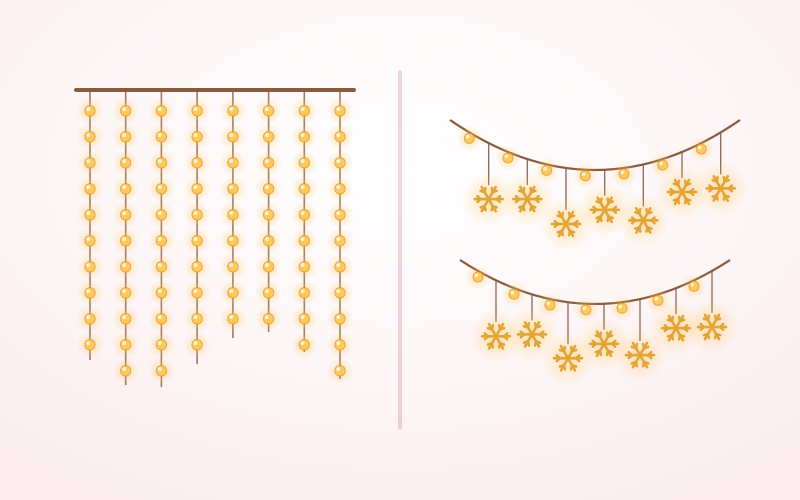
A curtain is a horizontal wire carrying vertical drops. It is designed to be seen as a field of light — behind a bed, across a photo corner, over a window. Sizing is width by drop: a 3 metre by 3 metre curtain covers a standard bedroom wall. Hang it too narrow and the drops bunch; too wide and you see the gaps.
Fairy lights trace an edge
A single strand follows something: a banister, a door frame, the rim of a shelf, the inside of a jar. On a bare wall a fairy light has nothing to describe and looks like a stray cable. Give it an edge and it does the work of a much larger installation.
Star and snowflake curtains are a third thing
These carry moulded shapes at intervals rather than bare points. The shapes read clearly from across a room and disappear in a close-up photograph, which is the opposite of how bare LEDs behave. They suit a window seen from outside, or a wall seen from the far side of a room.
Controllers
A curtain has more LEDs, so the controller matters more. A remote is close to essential on a curtain mounted above head height. On a short fairy strand within arm's reach, an inline button is fine.
If you only buy one
For a first purchase, a curtain does more visible work. A fairy strand is the better second buy, because by then you know which edges in the room want tracing.