
LED Diyas or Wax Diyas? How to Decide
Safety around children and pets, reusability, and the one situation where a real flame still wins.
This is not a question with one answer. Both belong in a Diwali setup, and the choice is usually about where in the house a particular diya sits.
Where LED wins
Anywhere a flame is a risk or a nuisance: a low shelf a toddler can reach, a balcony rail in wind, a corridor where a dupatta passes, near curtains, or in a home with a cat. LED diyas also survive being knocked over, which is the failure mode that actually happens.
Where a flame wins
The puja thali. For many families the lit wick is the point of the ritual, not a lighting effect, and no LED substitutes for it. Use real diyas where the ceremony calls for them and LED everywhere else — that is what most households end up doing.
Reusability
An LED diya lasts several festivals. The failure point is the button cell, not the LED, so store them with the cells removed. A cell left in over a year can leak and corrode the contacts, which is what usually kills a set that seemed fine when packed away.
Colour
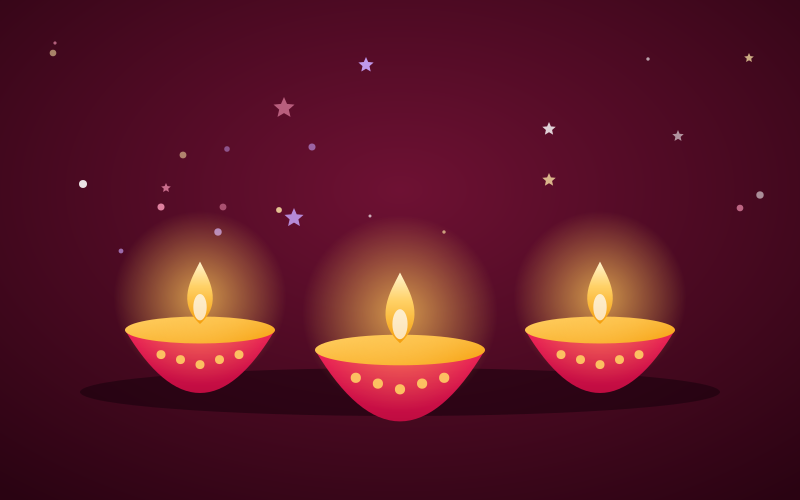
Look for a warm yellow flicker rather than a steady white. A flicker that varies slightly in brightness reads as a flame from a few feet away; a perfectly regular pulse does not. Cool white LED diyas look like appliances.
Disposal
Button cells do not belong in household waste. Indian cities have battery collection points — use them when a set finally dies.