
How to Choose Festive String Lights: Length, LED Count and Modes
Length, LED density, warm white versus multicolour, and how many metres a room actually needs — the four numbers that decide whether a strand looks right.
Most string light listings lead with a mode count. Modes are the least important number on the box. Four other things decide whether a strand looks the way you pictured it.
Length, measured against the wall
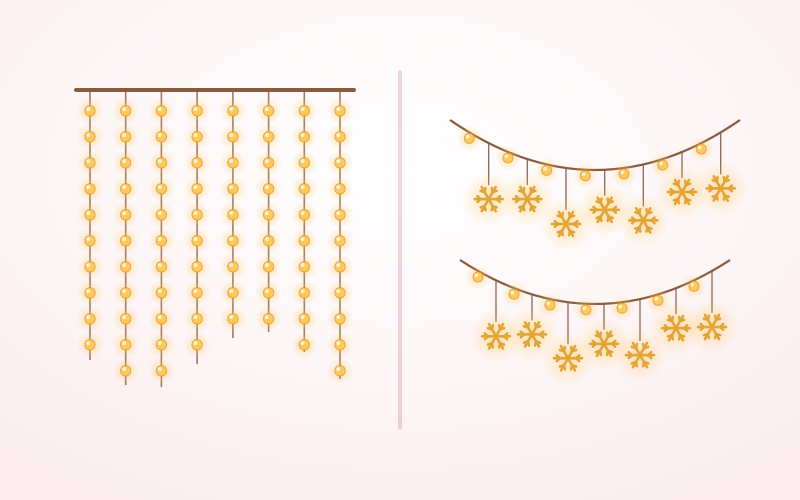
Measure the run before you order. A 5 metre strand around a standard door frame is generous; the same 5 metres across a 3 metre wall reads as sparse unless you drape it in swags. For a full wall backdrop, plan on the wall width multiplied by the number of vertical drops you want.
LED count tells you density, not brightness
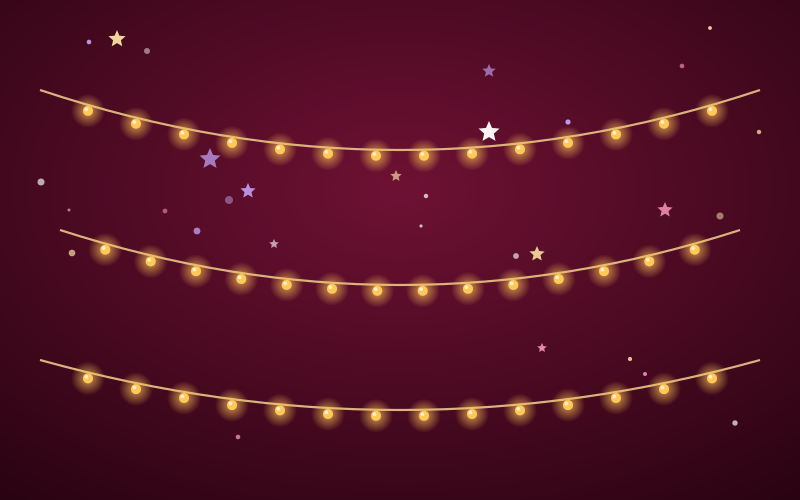
Two 5 metre strands with 50 and 100 LEDs put out different looks, not different amounts of light. The 100 LED version reads as a continuous line; the 50 LED one reads as distinct points. Points photograph better against a plain wall. A continuous line suits an outline — a doorway, a railing, a headboard.
Warm white, cool white and multicolour
Warm white sits around 2700K and flatters skin and wood. Cool white is closer to 6000K and reads clinical indoors, though it cuts through daylight better on a balcony. Multicolour is festive but hard to photograph — the colour shifts between exposures. If you are lighting a space for photographs, warm white is the safer default.
Power source
USB strands run from a power bank, which matters if the nearest socket is across the room. Mains strands are brighter and do not need recharging. Battery strands are the most flexible and the shortest-lived — plan on replacing cells during a long festival.
Then look at modes
Eight modes is standard. In practice most people use two: steady on, and a slow fade. A remote is worth more than the mode count, because it saves reaching behind furniture for the controller.